

All Posts
How do animal toys help your child learn while playing?
Play is the primary gateway to a child's world. It's not just a way to pass the time; it's the most effective tool through which they discover the world around them. Among all the toys that fill children's rooms, animal toys (whether plastic figurines, soft plushies, or even wooden figures) hold a very special place.
In this comprehensive guide, we'll explore the profound role animal toys play in supporting your child's cognitive, motor, and social development.
Why are animal toys so popular with children?
Children are naturally drawn to living things. Animals possess intriguing shapes, colors, sounds, and movements, which directly translates into their love for animal toys.
Emotional bonding: Children find it easier to form a "friendship" with a toy teddy bear or dog than with a toy car or block.
Realistic imitation: Animals are a familiar part of the stories they read or the cartoons they watch, making their representation in tangible toys incredibly enjoyable. Diversity and Variety: The animal kingdom offers countless options to satisfy a child's ever-changing curiosity, from farm animals to ancient dinosaurs.
How do animal toys help develop a child's imagination?
Imaginative play (or symbolic play) is the cornerstone of developing creative intelligence. Animal toys give children "heroes" for their own stories:
Scenario Creation: A child might transform simple animal figurines into a rescue battle in the jungle or a tea party with a lion and a rabbit.
Role-Playing: When a child speaks through an animal, they practice expressing their feelings and thoughts indirectly, which helps release pent-up energy in a healthy way.
Flexibility of Thought: The absence of strict rules in animal toy play allows children to create entirely new worlds and rules every day.
Learning Animal Names and Sounds in a Fun Way: Before a child begins to read and write, they rely on visual and auditory learning. Animal toys are an ideal way to build vocabulary:
Associating the name with the object: When a child holds a toy elephant and hears the word "elephant," the shape and name are imprinted in their memory much faster than simply seeing a picture in a book.
Imitating sounds: Imitating the sheep's "baa" or the cat's "meow" helps infants and toddlers in the pre-speech stage train their vocal cords and articulation in a fun and engaging way.
Correcting concepts: Through play, a child learns the difference between an elephant's "trunk" and a giraffe's "long neck," enriching their descriptive vocabulary.
The role of animal toys in developing fine motor skills:
Small animal figurines require precise movements of a child's fingers and hands to control them:
Visual-motor coordination: Placing the small animal in its toy enclosure or balancing it on a table requires focus and precise hand-eye coordination. Grip strength and fingertips: Holding toys of different sizes (like a small bird or a large camel) develops fine motor skills in the hand, a crucial step in preparing a child for writing, using a pen, and eating independently later on.
Construction and assembly skills: Some animal toys come in the form of blocks or building blocks, which enhances basic mechanical problem-solving skills.
How do animal toys promote communication and teamwork?
When two or more children play with animal figures, the toy becomes an excellent interactive environment:
Negotiation and sharing: “I’ll take the tiger, and you take the lion.” These simple dialogues teach children the value of sharing and negotiation.
Developing empathy and social intelligence: By creating situations like, “This little dog is lost and crying; let’s help him,” children learn about empathy, caring for others, and offering assistance.
Building dialogue: Playing together forces children to use longer sentences and formulate questions and answers to develop the toy's narrative with their peers or parents. Animal Games as a Tool for Exploring Nature and Wildlife
Animal games are the first gateway to understanding the environment and natural sciences:
Bio-Environments: Games can be divided into groups (animals of the Arctic, desert animals, ocean creatures, and forest animals), opening up interesting conversations about where each animal lives and why.
Simple Food Chains: Children learn that rabbits eat carrots and lions eat meat, paving the way for a simplified and age-appropriate understanding of ecological balance.
Respect for Nature: These games foster a passion for the environment, making children more aware of the importance of animal welfare and wildlife conservation for the future.
Developing Classification and Observation Skills Through Play
Classification is a fundamental mathematical and logical skill upon which children build much of their later knowledge:
Classification by Size: Arranging animals from smallest to largest (ant, rabbit, dog, horse).
Classification by Shared Characteristics: Sorting animals that fly (birds), swim (fish), and walk on four legs.
Ecological Classification: Domestic animals that live on a farm or in a house versus wild animals that live in the forest. Careful observation: Distinguishing individual differences (e.g., Which animals have horns? Which have fur? Which have feathers?).
How to choose the right animal toys for your child's age?
To maximize educational benefit and ensure your child's safety, toys should be chosen based on the appropriate age and needs:
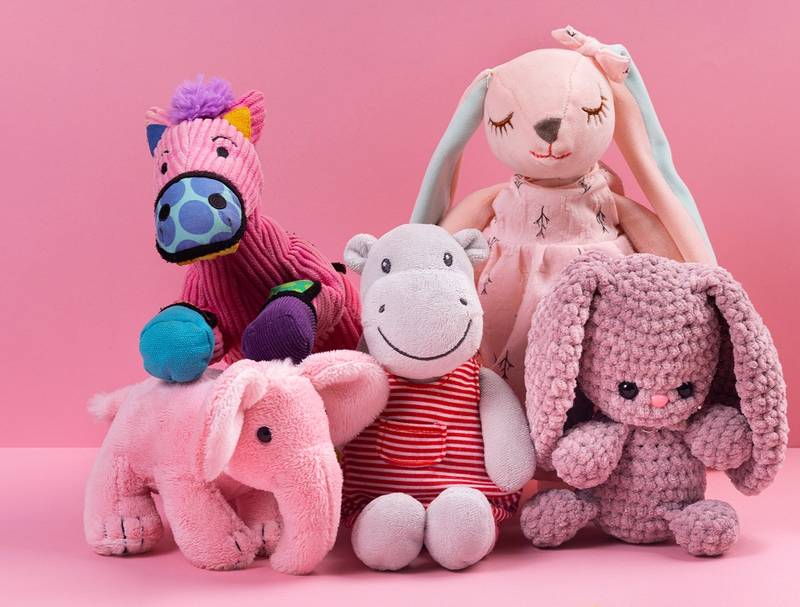
From birth to one year: In this early stage, it's preferable to choose soft plush animals made of fabric, or cloth books with raised animal pictures and different textures. These toys help explore the senses, such as touch and sight, and distinguish simple sounds. It's very important to check safety warnings so that the toys don't contain small parts that could be removed or swallowed, such as plastic doll eyes.